Why New Construction Homes Still Need a Professional Home Inspection
Buying a brand-new home is exciting. Fresh paint, brand-new appliances, modern finishes, and the comfort of knowing you’re the first owner can make it seem like a home inspection isn’t necessary.
Unfortunately, that’s one of the biggest misconceptions in real estate.
Even newly built homes can have significant defects, and skipping an inspection could leave you responsible for expensive repairs after you’ve already moved in.
“It’s Brand New… What Could Be Wrong?”
A new home may look perfect on the surface, but dozens of contractors, subcontractors, and suppliers work on every house. With tight construction schedules and increasing labor shortages, mistakes happen more often than many buyers realize.
Builders work hard to deliver quality homes, but no construction project is completely free of human error.
Some of the most common issues found during new construction inspections include:
- Missing or damaged roof shingles
- Improper attic ventilation
- Missing insulation
- Plumbing leaks inside walls or crawlspaces
- Electrical wiring defects
- Improperly installed flashing around windows and doors
- HVAC systems with installation issues
- Foundation cracks or drainage problems
- Unsafe deck or stair construction
- Missing GFCI or AFCI protection where required
Many of these issues are hidden behind finished walls or located in areas most homeowners never inspect.
Municipal Code Inspections Aren’t the Same Thing
One of the most common things buyers hear is:
“The town already inspected it.”
That’s true—but municipal building inspectors have a very different job than a home inspector.
A building inspector is verifying that construction generally complies with applicable building codes during specific phases of construction. They often spend only a limited amount of time at each property and are not performing a comprehensive evaluation of every system.
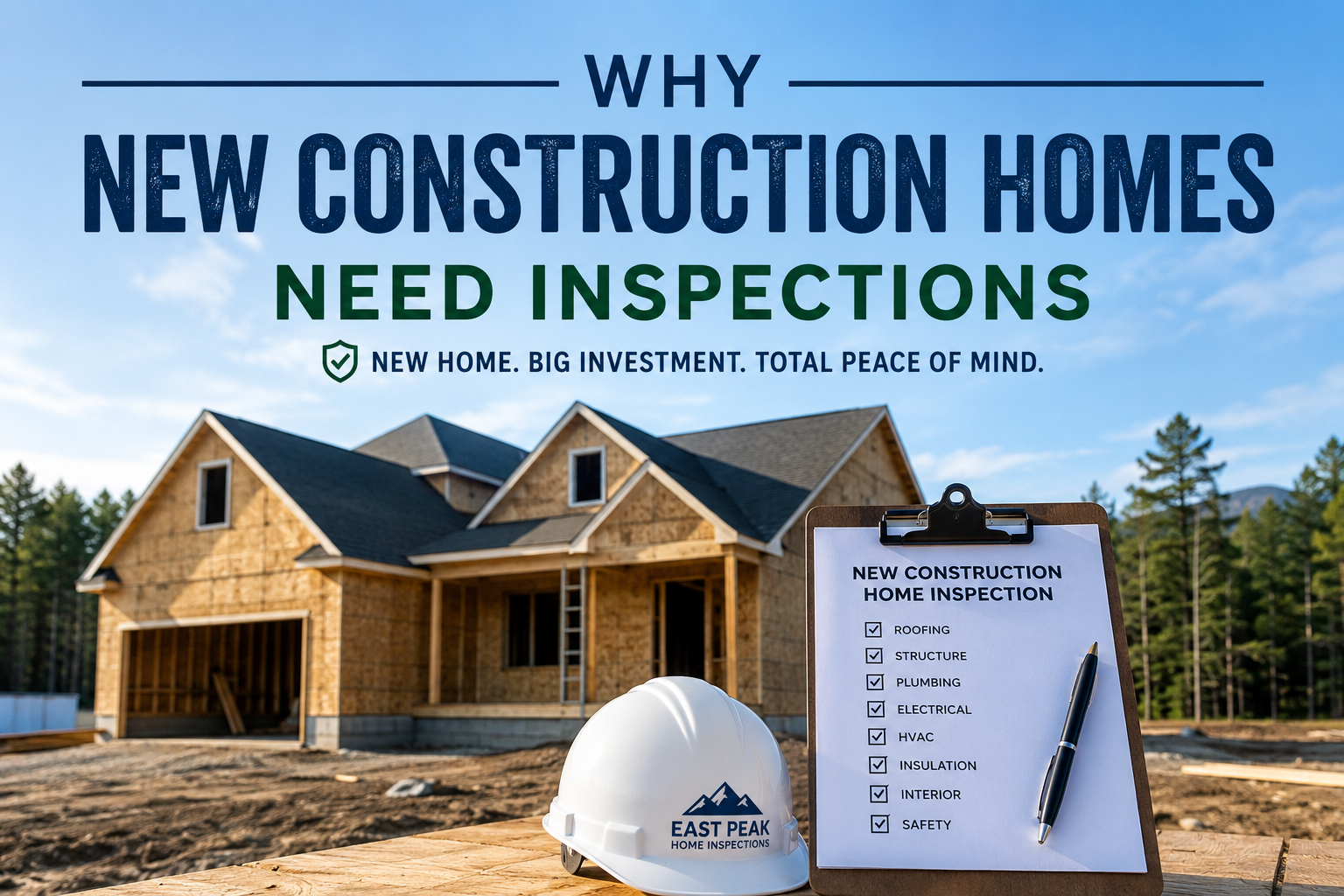
A professional home inspection is a detailed evaluation of the home’s major components, including:
- Roofing
- Structure
- Exterior
- Plumbing
- Electrical
- Heating and cooling systems
- Insulation and ventilation
- Interior components
- Safety concerns
These inspections are designed to identify defects, installation issues, and maintenance concerns that could affect your investment.
The Best Times to Inspect a New Home
Depending on where you are in the building process, there are several opportunities for an inspection.
Pre-Drywall Inspection
This inspection takes place before insulation and drywall are installed.
It allows many important structural and mechanical components to be examined while they’re still visible, including:
- Framing
- Electrical wiring
- Plumbing
- HVAC ductwork
- Window installation
- Roof structure
Once drywall is installed, many of these components can no longer be seen.
Final Inspection Before Closing
This is the inspection most buyers are familiar with.
The home is nearly complete, allowing the inspector to evaluate all accessible systems and identify defects that should be corrected before closing.
11-Month Warranty Inspection
Many builders offer a one-year warranty on new homes.
Scheduling an inspection around the eleventh month gives homeowners the opportunity to identify defects that may have appeared after living in the home, allowing repairs to be requested before the warranty expires.
An Inspection Can Save Thousands
Some issues are cosmetic.
Others can be surprisingly expensive.
Finding a roof installation defect, plumbing leak, or grading problem before closing gives the builder the opportunity to correct it—often at no cost to you.
Waiting until after the warranty expires could leave you paying for repairs yourself.
A professional inspection is a relatively small investment that can provide peace of mind and potentially save thousands of dollars in future repairs.
Buying New Doesn’t Mean Buying Perfect
A new construction home should be one of the biggest investments you’ll ever make. Even when everything appears flawless, having an independent inspection helps ensure the home was built as intended and gives you confidence before moving in.
Whether you’re purchasing your first home or building your forever home, an inspection provides valuable information that helps protect your investment.