
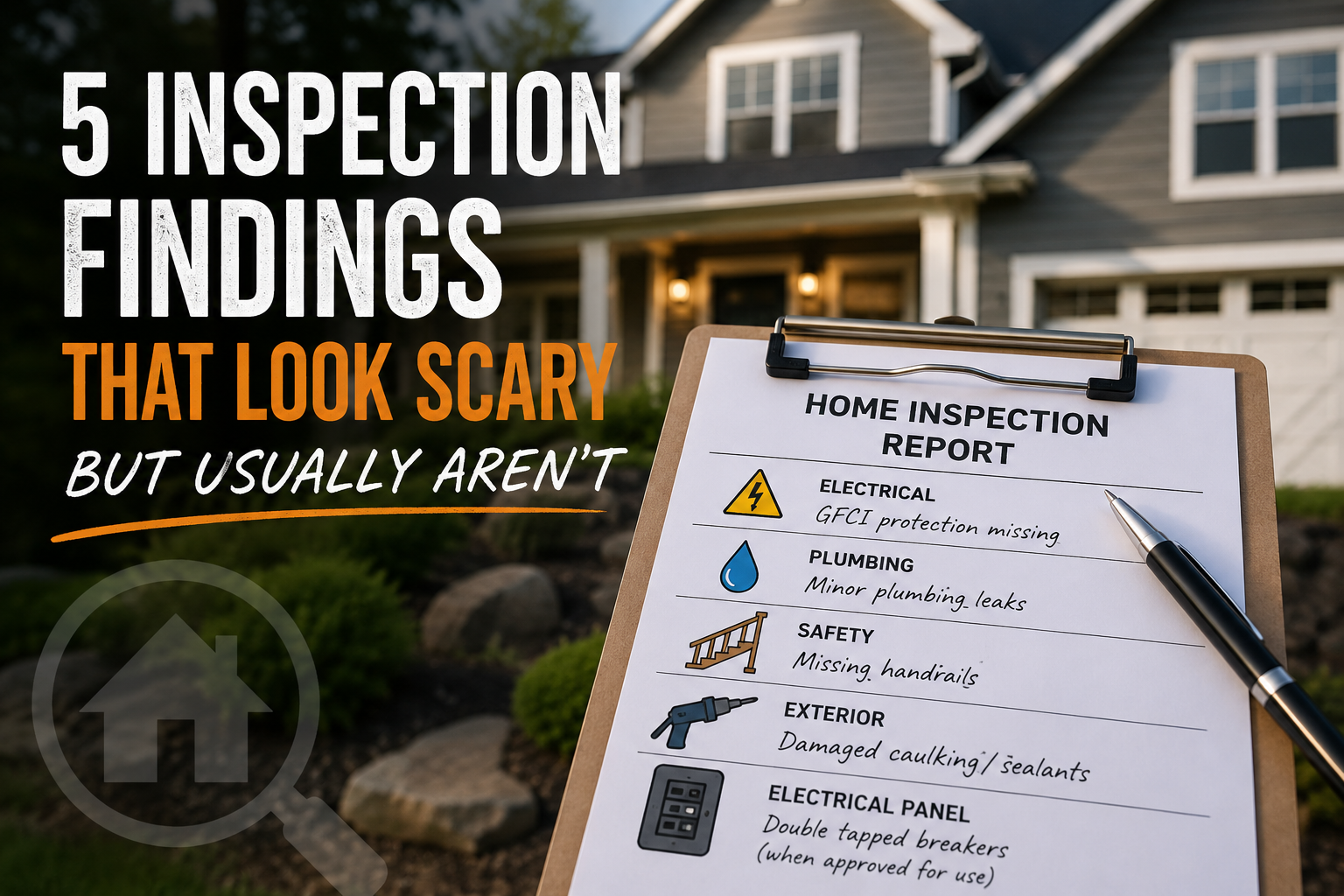
Five Inspection Findings That Look Scary (But Usually Aren’t)
Buying a home can be stressful, especially when the inspection report arrives. It’s common for buyers to see a long list of findings and immediately worry that something is seriously wrong with the property.
The good news? Many items that appear concerning in an inspection report are often routine maintenance issues or relatively straightforward repairs. Here are five findings that frequently cause concern but typically aren’t major problems.
1. GFCI Protection Missing
One of the most common electrical findings is missing GFCI (Ground-Fault Circuit Interrupter) protection in areas such as kitchens, bathrooms, garages, and exterior outlets.
While this is a safety concern that should be corrected, it usually does not indicate a larger electrical system problem. In many cases, adding GFCI protection is a simple upgrade performed by a qualified electrician.
Why it’s found: Many older homes were built before current electrical safety standards were adopted.
2. Minor Plumbing Leaks
Small drips beneath sinks, at shutoff valves, or around plumbing fixtures are commonly found during inspections.
While leaks should always be addressed to prevent water damage, these issues are often inexpensive repairs compared to major plumbing failures.
Why it’s found: Normal wear and tear on plumbing connections, seals, and valves.
3. Missing Handrails or Safety Improvements
Homes built decades ago often do not meet today’s safety standards. Missing handrails, widely spaced deck balusters, or stairway safety concerns frequently appear in inspection reports.
These are important safety items but typically do not indicate structural problems with the home.
Why it’s found: Building standards change over time, and older homes are generally evaluated based on the standards in place when they were built.
4. Damaged Caulking or Exterior Sealants
Cracked caulk around windows, doors, tubs, showers, or exterior penetrations often appears in inspection reports.
Although neglected sealants can eventually allow moisture intrusion, the repair itself is usually simple preventative maintenance.
Why it’s found: Caulking naturally deteriorates over time due to weather, sunlight, and seasonal expansion and contraction.
5. Double-Tapped Circuit Breakers (When Approved for Use)
Many buyers become concerned when they hear anything involving the electrical panel. However, some breakers are specifically designed and listed to accept two conductors.
When installed according to the manufacturer’s specifications, this may not be a defect at all.
Even when correction is needed, the repair is often relatively minor compared to concerns such as overloaded circuits, damaged wiring, or outdated electrical equipment.
Why it’s found: Electrical systems are frequently modified over the life of a home.
The Bigger Picture
A home inspection is not a pass-or-fail test. Every home has defects, maintenance items, and areas that may benefit from improvement.
The goal of the inspection is to help buyers understand the condition of the property, prioritize concerns, and make informed decisions—not to create unnecessary alarm.
Some findings may look intimidating on paper but turn out to be simple fixes. That’s why it’s important to discuss any concerns with your home inspector and focus on the overall condition of the home rather than the length of the report.